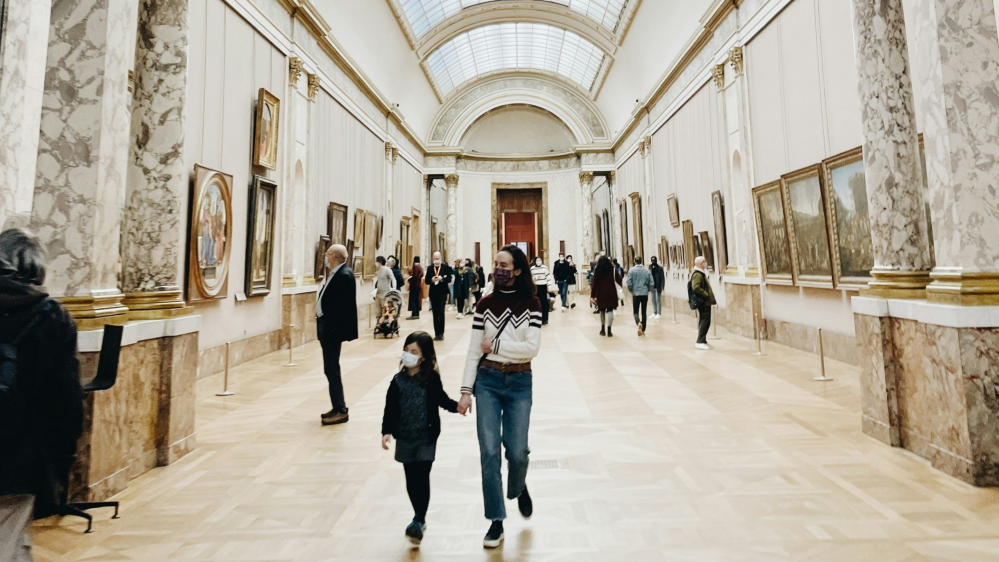
Museums used to be the custodians of the material testimony of history, evidenced by objects that have spatial dimension, shape, texture, aesthetic attributes, but which arealso also marked by fissions, ravels, and fractures - traces of encounters with time and reality. Today, however, this materiality is increasingly being sidelined, giving place to digital avatars of true artefacts and to contexts and interpretations that overshadow the objects own tacit material testimony. Creative Europe emphasises the digitisation enabling the borderless interconnection of public collections, by which it downplays the importance of face-to-face, on-site encounters with material collections.
Average titles: “smARTplaces - A European Audience Development Project”, “CONNECTING Early Medieval European COLLECTIONS”, “Intangible Cultural Heritage and Museums Project”, “Template for Travelling Interactive and Digital Exhibition”, “Together Reaching Audiences”, “Dancing Museums”, “Sharing Heritage - Sharing Values”, “In-NovaMusEUm: Museums come/s/(sic.) back to the locals through art and food”, “Mainstreaming Heritage”.
Sharing, connecting, accessing, mainstreaming, these are the key concepts in the titles, which are explained with the following argument: 'Museums are often perceived as dusty and elitist by younger people. European museums have not yet transformed their storytelling and are not yet fully aware of and exploiting the digital technologies available to bridge this digital divide. However, most museums have recognised that they need to evolve from static buildings to interactive and community meeting places if they are to survive in the future. On the other hand, in this turbulent digital world, museums can be places of silence and reflection. This is pushing many museums into a kind of identity crisis where they need support and guidance.”[1]. The above principles are adopted by the "smARTplaces"[2] project, aming: ”to move away from the passive visitor experience and instead connect audiences by creating a new digital cultural space in the form of an innovative European cultural site network that is dialogic, linked, interactive, educational, integrated, accessible, audience engaging and involving”. The “In_NovaMusEUm[3]” project wants to establish new approaches to interaction practices with the “committed” and “semi-committed” museum visitors and to start an audience diversification pilot to reach potential new audiences.
The language used in the projects is repetitive, self-controlled, without linguistic excesses or overstatement of objectives used in other thematic clusters. It is not that grant applicants are running out of terms for cultural disruption, but rather that they are pre-committed to ICOM's binding definition of what constitutes a museum. Their testimony is all the more alarming for the museum sector because it shows that once ideological language is imposed, thought and action follow and conformity becomes the rule.
Terminology and idioms:
- Museums evolving from static buildings to interactive and social meeting place
- Moving away from the passive visitor experience
- Creating a new digital cultural space
- Creating an innovative European cultural site network that is dialogic, linked, interactive, educational, integrated, accessible, audience engaging and involving.
- “Committed” and “semi-committed” museum visitors
- Audience diversification pilot
[1] Project title: Together Reaching Audiences. Activity period: 2016-19. EU grant: 149.737,16 €. URL: https://culture.ec.europa.eu/creative-europe/projects/search/details/570498-CREA-1-2016-1-BE-CULT-COOP1
[2] Project title: smARTplaces. Project period: 2016-20. EU grant: 1.999.999,99 €. URL: https://culture.ec.europa.eu/creative-europe/projects/search/details/570751-CREA-1-2016-1-DE-CULT-COOP2
[3] Project title: In-NovaMusEUm: Museums comes back to the locals through art and food. Activity period: 2016-18. EU grant: 193.541,96 €. URL: https://culture.ec.europa.eu/creative-europe/projects/search/details/570516-CREA-1-2016-1-IT-CULT-COOP1