Hungarian Election Results!
- 18:30 - 20:00 (followed by a reception)
- Tuesday 14th April 2026
- Central Brussels TBA
REGISTER HERE
Join MCC Brussels for a chance to analyse and interpret what happens in the Hungarian election, and what it will mean for the European Right, the EU, and Europe in general.
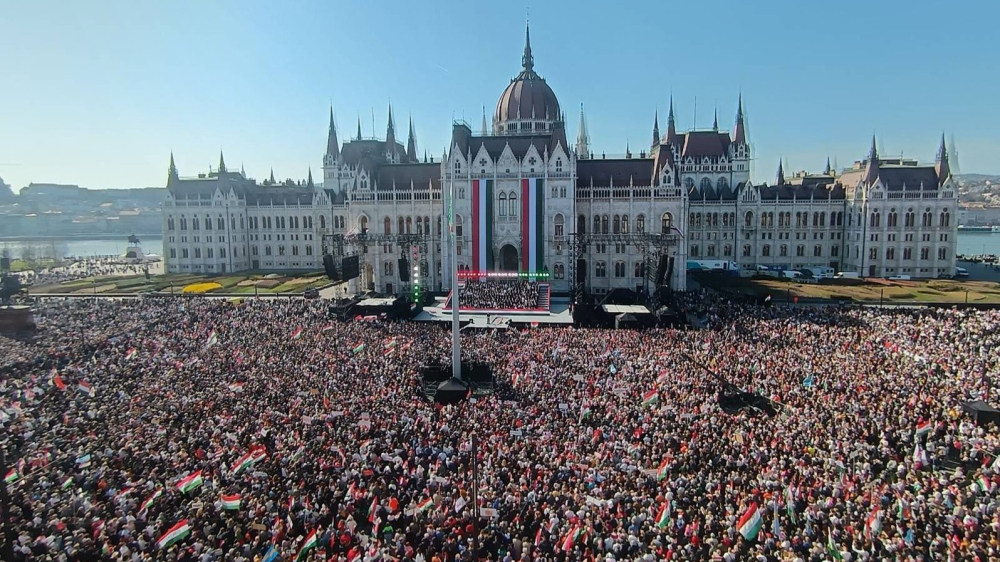
Hungary’s upcoming election is one of the country’s – and Europe’s – most consequential in decades.
Prime Minister Viktor Orbán faces arguably the toughest test in his political career. After four landslide election victories, and amid uniquely challenging geopolitical and economic conditions, many Hungarians are eager for change.
But this election has become about more than just Hungary. For the EU elites, the stakes in this election are critical – removing the “troublemaker” Viktor Orbán has been a barely-concealed priority for many years. As such, the election has become engulfed in claims of external interference. The EU has pulled out all the stops: a network of foreign funded NGOs, the activation of special regulations for online speech, and, according to the Hungarian government, an attempt to orchestrate an energy crisis with the help of Kyiv.
But the EU-friendly media have a very different account of foreign interference. In the run-up to the election the media has been flooded with claims of “Russian interference”. According to outlets like the Financial Times, a crack squad of Russian special agents are engaged in a special media operation to cook the election in Orbán’s favour. Strikingly, these Hollywood-level conspiracy theories have not been backed by any public evidence – but that hasn’t stopped the flood of headlines.
While claims of Russian interference are nothing new in European elections, the consequences here seem quite worrying. Already, some are casting doubt on the integrity of the electoral process itself. It is only a few months, after all, that an entire election was annulled in Romania after similar claims of Russian misinformation. The MCC Brussels-led initiative, Democracy Interference Observatory (DIO), closely monitored those interference claims. Is there a danger of the same narrative being deployed in Hungary, should Orbán win? Will the EU go as far as directly contesting the election?
More broadly for Europe, the consequences of this election could be enormous. Orbán has often been a lone voice vetoing EU plans for further centralisation, more migration, and further foreign-policy innovations. If the EU-backed opposition can unseat him, is it full-steam-ahead for more European integration? On the other hand, if the Hungarian people keep Orbán in office, then could the Orbanist intellectual project – which has adherents across the Patriotic right in Europe – gain new ground?
Join MCC Brussels to unpack the results of what will be a critical, and much-debated, election.
Speakers include:
Professor Frank Füredi, Executive Director, MCC Brussels
Liliana Śmiech, Director General for International Affairs, Ludovika University of Public Service (Budapest); Chairwoman, Foundation Council of the Warsaw Institute
Richard Schenk, research fellow, MCC Brussels
Bruno Waterfield, politics editor, Euractiv; and one of the longest serving correspondents in Brussels with over 25 years of covering European politics
 April 14, 2026 at 6:30 PM - April 14, 2026 at 8:00 PM